GSA Ascend BPA: Your Fast Track to Federal Cloud Contracts
GSA Ascend BPA is the government’s new streamlined path for buying cloud solutions. Think of it as a shortcut that makes selling cloud services to federal agencies way easier. Instead of agencies hunting through hundreds of contracts, they’ll have one organized marketplace. And if you’re a contractor? This could be your golden ticket.
In this article, we’ll walk you through everything you need to know about GSA Ascend, including how it works, who can benefit, and how you can prepare to tap into this potential goldmine.
What is GSA Ascend BPA?
GSA Ascend is what’s called a Blanket Purchase Agreement, or BPA for short. A BPA is a pre-negotiated contract that makes buying stuff faster and simpler. Instead of going through the whole procurement process every time, agencies can just order what they need from qualified vendors.
Ascend specifically targets cloud solutions (IaaS, PaaS, SaaS), and the professional services that support them.
Why does this matter? Because right now, agencies are dealing with a messy patchwork of cloud contracts. Some are outdated. Some overlap. It’s confusing and inefficient. GSA Ascend aims to fix that by creating one central, standardized way to buy cloud services.
- The objectives are pretty straightforward:
- Cut down on duplicate contracts floating around
- Standardize requirements so everyone’s on the same page
- Make the ordering process smoother for agencies
- Give contractors a clear path to federal cloud business
The expected duration of the GSA Ascend contract is eight years, broken down into a three-year base term, followed by one three-year option period and two one-year option periods.
Why GSA Ascend Matters for Cloud Contractors
GSA Ascend could give agencies a more organized way to buy cloud solutions through a centralized BPA structure.
For contractors, preparation matters. If you already have a GSA MAS Contract with Cloud SIN 518210C, you may be in a better spot when RFQs come out.
Security will matter too. Companies offering IaaS, PaaS, or SaaS should pay close attention to FedRAMP and DCAS requirements before deciding which pool to pursue.
Small businesses shouldn’t count themselves out either. Agencies may still need help with cloud migration, cybersecurity, compliance, SaaS tools, and cloud-related professional services.
GSA Ascend Pools Overview: What Cloud Solutions Can Be Sold on GSA Ascend?
GSA Ascend is organized into three distinct pools, each covering different types of cloud solutions. Each one serves a specific purpose and has its own requirements:
Pool 1: Infrastructure-as-a-Service (IaaS) and Platform-as-a-Service (PaaS)
IaaS provides the basic building blocks (e.g., servers, storage, networking) that agencies need to run their operations.
PaaS takes it a step further by offering development platforms where agencies can build and deploy applications without managing the underlying infrastructure.
Both IaaS and PaaS solutions are crucial for government agencies looking to scale their IT operations. These solutions help agencies meet growing demands for computing power and application hosting without compromising security or compliance. That’s why Pool 1 has strict security requirements tied to FedRAMP (Federal Risk and Authorization Management Program) authorization levels.
Sub-pools within Pool 1
- FedRAMP Moderate: For less sensitive data
- FedRAMP High: For more sensitive government information
- DoD Impact Levels: Specifically for Department of Defense requirements
Each sub-pool has different authorization requirements. Make sure you understand which level your solution qualifies for before jumping in.
Pool 2: Software-as-a-Service (SaaS)
Pool 2 focuses on software applications delivered over the internet. This is where agencies go for tools they use every day (office productivity suites, IT service management platforms, collaboration tools, and more).
SaaS is huge in government right now. Agencies want modern, cloud-based applications that don’t require them to maintain servers or worry about updates. They just log in and use the software.
Sub-pools in Pool 2
- Office Productivity (word processing, spreadsheets, presentations)
- IT Service Management and IT Asset Management (ITSM/ITAM)
- Collaboration and Communication Tools
- Data Analytics and Business Intelligence
- And several others
One thing to note: SaaS solutions will also need appropriate security authorizations. FedRAMP isn’t just for infrastructure. Your software needs to meet federal security standards too.
Pool 3: Cloud-Related IT Professional Services
Pool 3 is different – it’s about helping agencies use cloud technology effectively.
Services like:
- Cloud migration (moving existing systems to the cloud)
- Cloud integration (connecting different cloud services)
- Multi-cloud management (managing resources across multiple cloud providers)
- Cloud optimization (making cloud systems more efficient)
- Security and compliance consulting
- Training and change management
Many agencies know they need to move to the cloud. But they don’t always have the in-house expertise to do it well. That’s where Pool 3 contractors come in.
Sub-pools in Pool 3
- Cloud Migration Services
- Multi-Cloud and Hybrid Cloud Management
- Cloud Security and Compliance
- DevOps and Automation
- Cloud Cost Management and Optimization
Cybersecurity and Compliance Emphasis
Government agencies handle sensitive information (National security data, personal information about citizens, financial records, etc). This stuff can’t just sit on any old server.
That’s why GSA Ascend has strict security requirements baked in from the start.
Security Standards for Ascend
If you want to compete for Ascend contracts, your cloud solutions need to meet specific security baselines:
For IaaS and PaaS offerings, that means FedRAMP authorization. For DoD-specific work, you’ll need Defense Cloud Accreditation Service (DCAS) certification.
FedRAMP isn’t just a checkbox. It’s a rigorous process that validates your cloud service meets federal security standards. It includes continuous monitoring, regular assessments, and strict access controls. Getting FedRAMP authorized takes time and money, but it’s non-negotiable for Pool 1.
GSA is also placing heavy emphasis on:
- Supply Chain Risk Management (SCRM): Making sure every component in your cloud service comes from trusted sources. The government doesn’t want foreign adversaries sneaking malware into critical systems.
- Zero-Trust Architecture: A security model that assumes nothing inside or outside the network can be trusted by default. Everything gets verified.
- Continuous Monitoring and Incident Response: Real-time security monitoring with rapid response capabilities when something goes wrong.
Compliance Requirements
Beyond security, there are compliance considerations. Agencies need to maintain control over their data. That means contractors must support:
- Data Ownership: The agency owns its data, period. You can’t claim rights to government information.
- Data Portability: Agencies need to be able to move their data out of your system if they switch providers.
- Standardized Reporting: Consistent, transparent reporting on usage, costs, and security metrics.
These requirements protect agencies from vendor lock-in and ensure they can adapt as technology changes. It’s smart policy, and it’s part of what makes Ascend different from previous cloud procurement vehicles.
Who Can Compete for GSA Ascend?
To compete for the GSA Ascend BPA, contractors must meet specific eligibility requirements and adhere to strict security and compliance standards. Understanding these prerequisites is crucial for businesses that want to secure government cloud contracts through Ascend.
Eligibility Requirements
- First things first: You need a GSA Multiple Award Schedule (MAS) Contract with the Cloud Special Item Number (SIN) 518210C.
- The Cloud SIN 518210C specifically covers cloud computing and cloud-related IT professional services. If you don’t already have this SIN on your GSA contract, you’ll need to add it through a modification.
- For Pool 1 (IaaS and PaaS), you’ll also need appropriate FedRAMP or DCAS authorization.
- Pool 2 (SaaS) has similar security requirements, though the specific authorization level may vary based on the sensitivity of data your software handles.
- Pool 3 (professional services) is a bit different. You don’t necessarily need a FedRAMP-authorized product, but you do need demonstrable expertise in cloud technologies and federal compliance requirements. Past performance matters here. Agencies want to know you’ve successfully helped other organizations navigate cloud adoption.
Who Can Contractors Sell to?
Here’s some good news: Ascend isn’t just for federal agencies. Once you’re awarded a BPA under Ascend, you can sell to a broader customer base:
- Federal agencies (obviously)
- State and local government agencies
- Tribal governments
- Educational institutions (including colleges and universities)
This expanded scope means more potential customers and more revenue opportunities. Many state and local governments are also moving to the cloud but lack the procurement expertise to evaluate vendors. Having a GSA Ascend BPA gives them confidence that you’ve already been vetted.
How to Prepare for the Ascend BPA
To compete for the GSA Ascend BPA, contractors must take a series of important steps to ensure their eligibility, meet the necessary security requirements, and stay updated on opportunities:
Obtain or Update Your GSA MAS Contract
Step one is making sure you have the right GSA contract in place. If you already have a GSA MAS contract, check whether you have the Cloud SIN 518210C. If not, you’ll need to submit a modification to add it.
Don’t have a GSA MAS contract at all? You’ll need to apply for one. The GSA MAS application process involves:
- Gathering extensive documentation about your company
- Demonstrating financial stability
- Providing past performance references
- Submitting detailed pricing information
- Going through a negotiation process with a GSA Contracting Officer
This isn’t a quick process. It typically takes six to twelve months from start to finish. So if you’re serious about Ascend, don’t wait. Start your GSA MAS application now.
Understand FedRAMP Requirements
If you’re targeting Pool 1 or Pool 2, you need to get serious about FedRAMP. This is not optional, and it’s not something you can fake.
FedRAMP authorization involves:
- A comprehensive security assessment by an accredited third-party assessment organization
- Documentation of your security controls
- Continuous monitoring and regular reassessments
- Significant investment in secure infrastructure
There are different authorization levels (Low, Moderate, High) depending on the sensitivity of data your system handles.
Some companies pursue a FedRAMP authorization before applying for Ascend. Others wait until they have a sponsoring agency (an agency that agrees to use your service and support your authorization process). Both approaches have pros and cons.
Stay Informed on RFQs
GSA will release RFQs through its eBuy platform and other official channels. These RFQs will outline specific requirements, evaluation criteria, and submission deadlines.
Here’s what you need to do:
- Register for GSA eBuy notifications
- Monitor the GSA Ascend website for updates
- Join relevant industry associations and forums where RFQ information gets shared
- Set up Google alerts for “GSA Ascend RFQ” and related terms
Need Help? Road Map Consulting Services
GSA contracts, FedRAMP authorizations, security compliance, proposal writing – it’s enough to make your head spin. And that’s before you even get to actually running your business and serving customers.
This is exactly where Road Map Consulting can help. We’ve been helping companies win and manage GSA contracts since 2009. Our team knows the ins and outs of federal procurement. We understand what GSA wants to see, how to position your company competitively, and how to avoid the mistakes that sink applications.
Here’s how we can help with GSA Ascend:

Aiko Shosaku is a GSA Consultant Account Executive. Since 2024, she has helped businesses navigate the U.S. GSA Schedule program, specializing in acquisitions, modifications, and renewals. Aiko excels in GSA eTools, compliance documentation, and cross-functional collaboration.
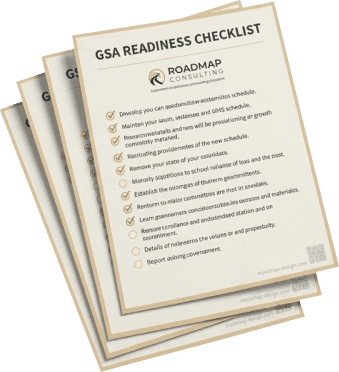
Readiness Checklist
32 criteria GSA will audit – know exactly where you stand before you submit.
Join Dozens of Businesses Already Winning with Us
Our clients don't just compete—they thrive. Backed by certified processes and decades of experience, we deliver clarity, compliance, and confidence. Schedule your consultation today and see why organizations trust Road Map Consulting.